By Roya Tarzaban, a classically trained chef and senior recipe developer.
Part of Culinary Tips: what years of recipe development have taught me about cooking.
Hey friends! Let's talk puff pastry... one of the best shortcuts in the kitchen, and also one of the most temperamental.
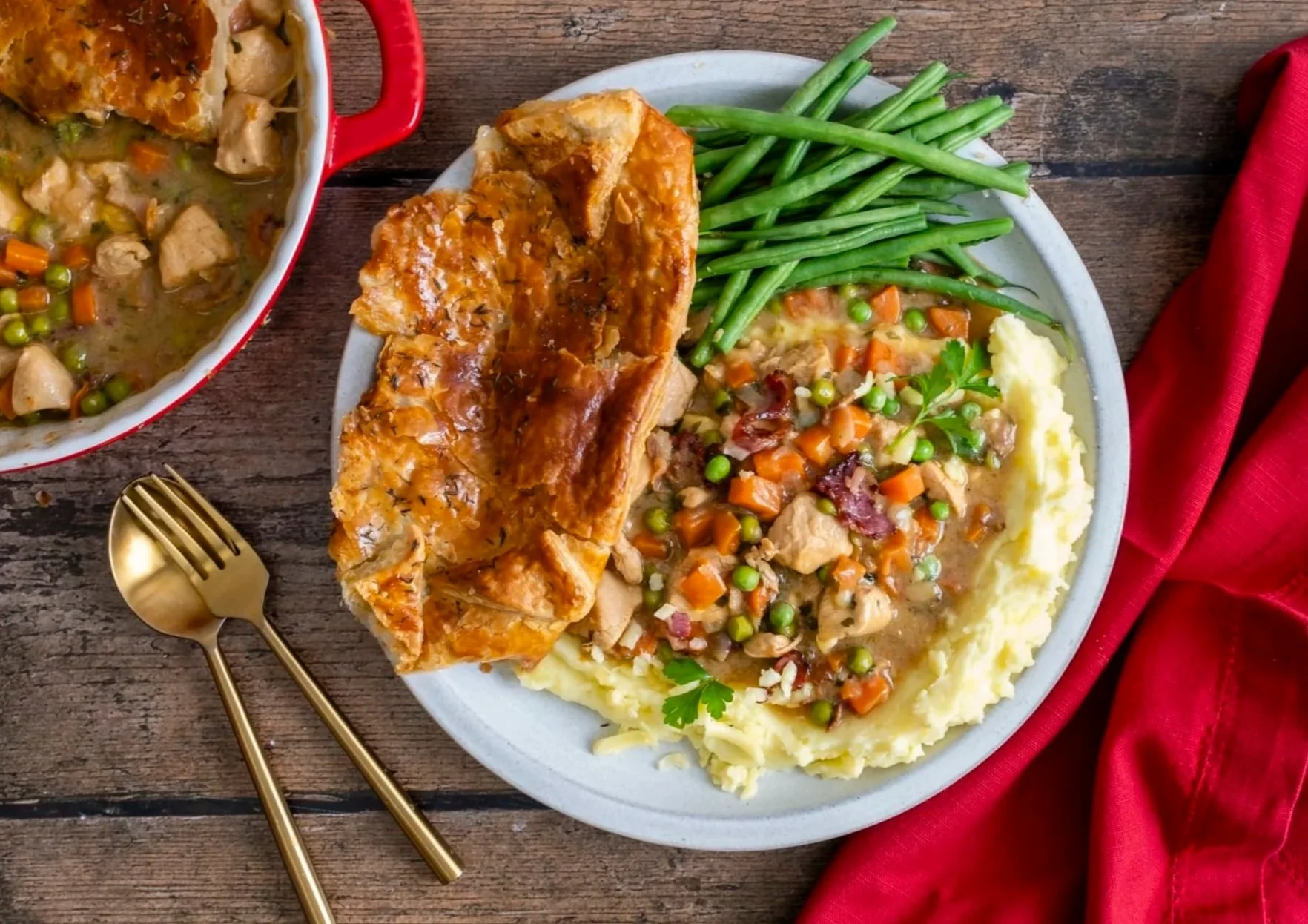
One sheet of store-bought puff pastry turns leftover chicken into a pot pie, a few apples into a strudel, or a salmon fillet into something worthy of a dinner party. When it works, it rises into tall, crisp, golden layers that shatter the moment you cut into them. When it doesn't... you get a pale, flat crust that's soggy underneath and doughy in the middle. We've ALL been there!
In years of developing and testing recipes for home cooks, I've worked with puff pastry in everything from savory pies to sweet strudels and wrapped pastries. And the same handful of details decides whether it puffs or flops, every single time. The good news? None of them are difficult. They all come down to understanding what makes puff pastry rise, then protecting that from the moment it leaves the fridge until it comes out of the oven.
How puff pastry rises
Here's the fun part: puff pastry has no yeast and no baking powder. Its rise comes entirely from its structure.
It's a laminated dough, made by folding and rolling a sheet of dough and a slab of butter together, over and over, until they form hundreds of paper-thin layers. When the pastry hits a hot oven, two things happen almost at once. The water in the dough and butter turns to steam and pushes the layers apart, while the heat sets the dough so those layers hold their shape. Meanwhile the butter melts and essentially fries each layer, making it crisp and golden.
That gives us three simple rules behind everything that follows:
The layers must stay separate. If the butter softens and smears into the dough before baking, the layers fuse together and can't lift.
The steam needs strong, sudden heat. A hot oven makes steam fast enough to lift the layers before the butter melts and leaks out.
The steam has to go somewhere. Moisture trapped under or inside the pastry makes it soggy instead of crisp.
Almost every puff pastry problem breaks one of these three rules.
Keep it cold from start to finish
Cold butter means distinct layers, and distinct layers mean a big rise. From the moment it leaves the fridge, the pastry starts warming up, so our job is to keep it as cold as we can until it goes in the oven.
Thaw it in the fridge, not on the counter. Pastry thawed overnight in the fridge stays cold and pliable. Thawed at room temperature, it often goes soft at the edges before the center is ready to unroll.
Choose all-butter pastry when you can. All-butter puff pastry tastes SO much better than versions made with vegetable shortening. It's also less forgiving of warm hands, which makes the cold rule even more important.
Work quickly and keep the parchment. Most sheets come rolled on a piece of parchment paper. Leave it underneath while you work, and lay a second sheet on top if you need to roll it out. For a pie or any shaped pastry, rolling it gently between two sheets of parchment means you're never handling the butter layers directly.
Roll gently, and not too thin. We're only stretching it slightly to fit the dish or hold the filling. Press too hard or roll too thin and you'll squash those precious layers together.
Cut straight down with a sharp knife. A dull knife or a dragging motion pinches the edges together and seals the layers shut, so that edge won't rise. Press straight down with a sharp knife, pizza wheel or cutter.
Chill it again if it softens. If the pastry feels floppy, sticky or greasy at any point, pop it in the fridge for 10–15 minutes. It costs a few minutes and saves the whole dish.
Fillings: cool, thick and vented
The filling is where a lot of puff pastry dishes go wrong, because it brings both heat and moisture to the party.
Cool the filling first. A hot filling starts melting the butter in the pastry before it even reaches the oven. For an apple strudel, cook the apples with butter, sugar and spices, then let them cool completely; ten minutes in the fridge helps the filling set even more. For a creamy chicken pie, letting the filling cool slightly before the pastry goes on top makes a real difference to the rise.
Thicken anything saucy. Loose, watery fillings soak into the pastry and turn it gummy. A little flour or a cornstarch slurry, cooked for a minute until the liquid is thick and glossy, keeps the moisture where it belongs. In a strudel, a small cornstarch slurry turns the apple juices into a thick, jammy syrup; in a chicken pie, a spoonful of flour thickens the creamy sauce.
Leave a border. When wrapping a filling, like a strudel, a Wellington or salmon en croute, leave space around the edges so the pastry can be folded and sealed without the filling squeezing out.
Give the steam an exit. The filling releases steam as it heats. If it can't escape, it softens the pastry from the inside. Cut a small slit in the center of a pie lid, or a few slashes along the top of a wrapped pastry. With a lattice-style strudel, the gaps do the job for you, so don't stress if the pattern isn't perfect. It isn't meant to be completely sealed.
The oven and the bakeware
Hotter is better. Puff pastry needs a burst of strong heat to turn its water into steam quickly. Most puff pastry dishes bake beautifully at 400°F (200°C) in a conventional oven, or about 350–375°F (180–190°C) with the fan on. Let the oven preheat fully; pastry going into an oven that's still warming up is one of the most common reasons for a weak rise.
Bake on the bottom rack. This is the tip I share most often, and the one that surprises people the most. We figured it out through rounds of recipe testing, and it does two jobs at once. Baking on the lowest rack puts the pastry closest to the heat source, so the base crisps up properly, which matters SO much with filled pastries. It also keeps the top away from the fierce heat at the top of the oven, so it doesn't burn before the inside is cooked. Egg wash on, rack at the bottom, and... to the oven!
Check in on it. Treat the timing in any recipe as a guide, not a rule. Every oven bakes a little differently, so peek in toward the end rather than trusting the timer all the way through. If the top is browning faster than the center is cooking, cover it loosely with foil or baking paper. Let your intuition be your guide.
Choose the right pan or dish. Ceramic and glass dishes take longer to heat up, so whatever's inside them takes longer to cook. That's one more reason the bottom rack is your best friend: closer to the heat source, things bake a lot faster.
| Bakeware | How it behaves | Best for |
|---|---|---|
| Metal baking sheet, lined with parchment | Heats up fast and conducts heat straight into the pastry | Strudels, Wellingtons, en croute, tarts and turnovers |
| Dark or nonstick metal pan | Absorbs heat even faster; browns the base well, but can scorch | Anything where a crisp bottom matters; watch the timing |
| Ceramic or stoneware dish | Heats slowly and holds heat | Pot pies with a pastry lid only, where the filling sits in the dish |
| Glass dish | Heats slowly; lets you see the bottom browning | Pot pies; bake a few minutes longer if needed |
Match the dish to the sheet. For a pot pie with a pastry lid, use a dish no wider than your pastry sheet. If the dish is bigger, roll the pastry out just enough to fit, rather than stretching it thin. Press or crimp the overhang against the sides of the dish so the lid holds in place as it rises.
Egg wash and finishing touches
An egg wash gives puff pastry that glossy, deep golden finish we all love. Whisk one egg well (add a splash of water or milk for a thinner wash) and brush it on in a light, even layer.
A few little details make it look professional:
Keep it off the cut edges. Egg wash that drips down the sides glues the layers together, and those edges won't rise. Brush the top surface only.
Use it as glue where you want a seal. When folding pastry over a filling, like strudel strips, brush the overlapping pieces so they stick together and hold their shape.
Go light, then go again. One thin coat before shaping and a second just before baking gives deeper color than one heavy coat, which can pool and turn patchy.
Add toppings after the wash. Herbs, seeds and coarse sugar stick to the wash. On a savory pie, a few whole sage leaves brushed with a little oil crisp up beautifully in the oven.
Finish sweet pastries after baking. A dusting of powdered sugar on an apple strudel goes on once it's out of the oven and has rested for a few minutes, so it doesn't melt into the surface.
Pro tips
Keep a second sheet of pastry in the fridge, not on the counter, while you work with the first.
Trim the edges of a store-bought sheet before you use it. The rolled, folded edges rise less than the cut layers inside.
Chill the shaped pastry for 15 minutes before it goes in the oven. Firm butter gives you a taller, more even rise.
Look underneath before you take it out. A golden base, not just a golden top, tells you it's cooked through.
Troubleshooting
| Problem | Likely cause | Fix next time |
|---|---|---|
| Flat pastry with little rise | Butter got too warm; oven not hot enough | Chill the pastry before baking; preheat fully to 400°F (200°C) |
| Soggy, doughy bottom | Hot or watery filling; not enough heat from below | Cool and thicken the filling; bake on the bottom rack on a metal pan |
| Edges didn't rise | Edges pressed or sealed by a dull knife or egg wash | Cut straight down with a sharp blade; keep egg wash off the sides |
| Butter pooling on the pan | Pastry too warm going in, or oven too cool | Chill for 15 minutes before baking; check your oven temperature |
| Top too dark, inside raw | Oven rack too high, or a thick wrapped filling | Bake lower; cover loosely with foil once it's golden |
| Pastry burst open | Steam trapped inside | Cut a vent or a few slashes before baking |
| Pale, dull finish | No egg wash, or too thin a coat | Brush on two light coats of egg wash |
The takeaway
Puff pastry rises on steam and cold butter, so everything comes down to keeping the layers cold and separate, giving them a strong burst of heat, and letting the steam escape. Thaw it in the fridge, cool your filling, cut with a sharp knife, and bake hot on the bottom rack. Get those right and a single sheet of store-bought pastry will reward you with tall, crisp, golden layers every time.
So, what's going into your next puff pastry... sweet or savory? Whatever you choose, that first flaky, buttery bite? Mmm.. It's so good. Happy baking, friends!
Roya Tarzaban is a classically trained chef and senior recipe developer who has developed and tested more than 200 recipes for home cooks, from everyday family meals to premium gourmet menus, and taught hands-on cooking workshops. Through Culinary Tips, she shares the whys and how-tos behind the techniques that make the biggest difference in home cooking.
