By Roya Tarzaban, classically trained chef and senior recipe developer.
Part of Culinary Tips: what years of recipe development have taught me about cooking.
Let's talk about the unsung hero of the dessert world... whipped cream.
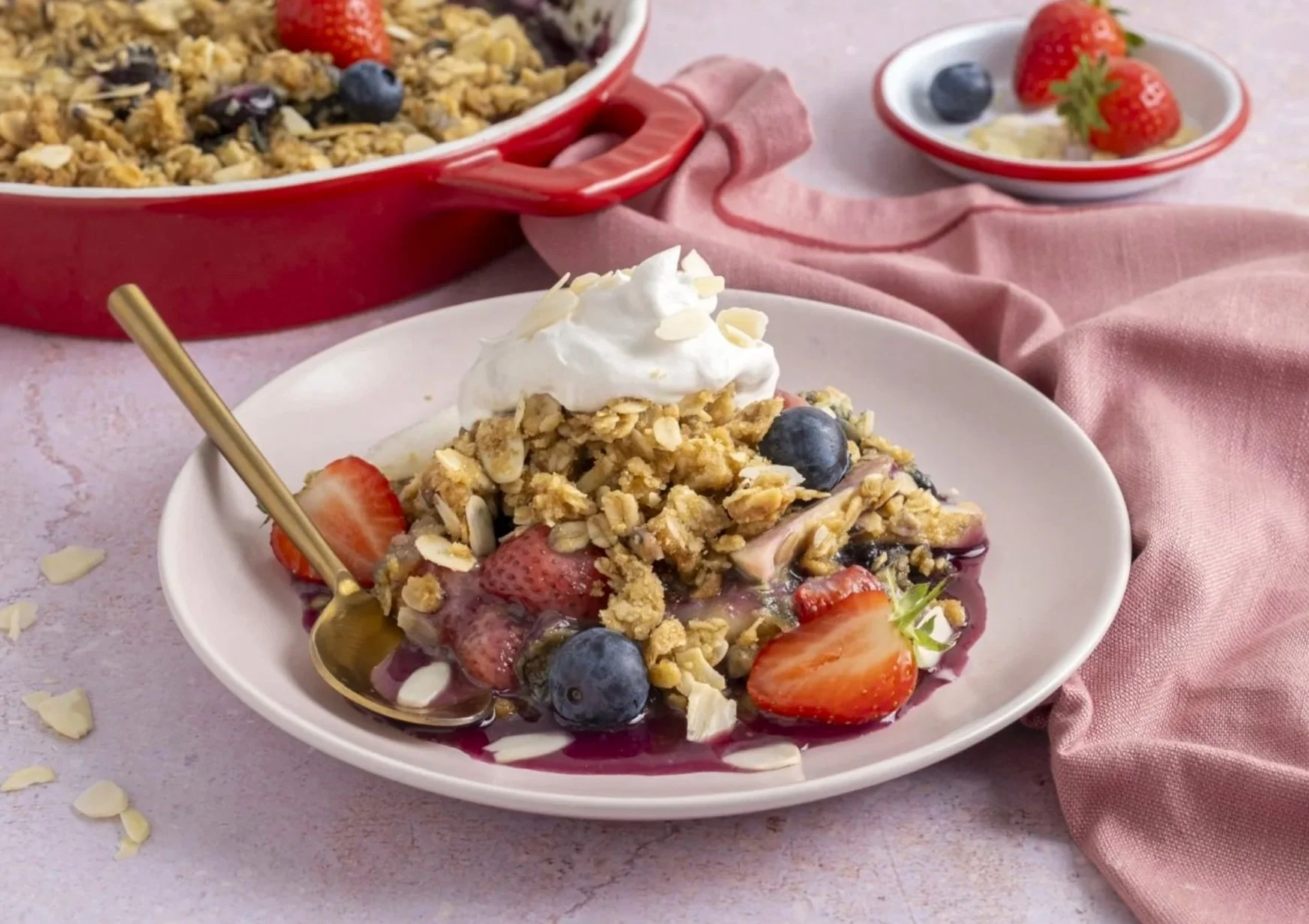
Think about how many desserts lean on it. It's piled on top of banoffee pie and banana pudding. It's folded into no-bake cheesecake to make it light and airy. It's spread over a chocolate cake, dolloped next to a warm fruit crumble, and it's even the base of a super-easy no-churn ice cream. When we develop desserts, whipped cream shows up in recipe after recipe.
And it's simple, right? Just cream and a whisk. But it's also easy to get wrong. It won't thicken. It goes from fluffy to grainy in seconds. It collapses into a puddle an hour after you made it. Or it knocks all the air out of the cheesecake filling you just folded it into.
The good news? Once you understand what's actually happening in the bowl, whipped cream becomes one of the easiest, most useful skills in your kitchen. Let's get into it.
What makes cream whip
The nerdy, science bit... Cream is made of tiny droplets of fat floating in liquid. When we whisk it, we're pushing air bubbles into that liquid. The whisking also knocks the fat droplets around until their outer layers break open, and they start sticking to each other and to the air bubbles. Bit by bit, the fat builds a soft net that traps the air in place. That net is what turns liquid cream into a fluffy cloud that holds its shape.
Two things make that net strong: enough fat and cold temperatures.
Use the right cream
The more fat in the cream, the easier it whips and the longer it holds:
Heavy cream or heavy whipping cream (36% fat or more in the US) is the most reliable choice. It whips up thick and stays put.
Whipping cream (around 30–36% fat) whips well too, just a little softer and lighter.
Light cream, half-and-half or cooking cream don't have enough fat to hold air. They'll never get past frothy, so save them for sauces and coffee.
Outside the US the names change a bit, so it's always worth checking the fat percentage on the carton. In the UK, look for double cream (about 48% fat) or whipping cream (about 35%); in Australia, thickened or pure cream; in Canada, whipping cream (33–36%). Single or cooking cream won't whip.
Keep everything cold
Cold fat is firm, so it holds the air bubbles tightly. Warm fat is soft and greasy, and the bubbles slip right out. So:
Keep the cream in the fridge right up until you need it.
Chill the bowl and whisk (or beaters) in the fridge or freezer for 10–15 minutes first. A metal or glass bowl stays cold longest.
On a hot day, set your mixing bowl over a larger bowl of ice water while you whip.
Cold cream also gives you a bigger margin for error. It thickens a little more slowly, so it's easier to stop at exactly the right moment.
Soft peaks vs. stiff peaks
Recipes love to say "whip to soft peaks" or "whip to stiff peaks," but what do those actually mean? The easiest way to check is to stop the mixer, lift the whisk straight up out of the cream and look at the little peak it leaves behind.
| Stage | What you see | Best for |
|---|---|---|
| Foamy | Bubbly and frothy, still pourable; no peaks yet | Keep going! |
| Soft peaks | The peak forms, then flops over at the tip; cream looks soft and pillowy | A dollop on warm crumble or pie, folding into mousse, spooning over fruit |
| Medium peaks | The peak holds but the tip curls over slightly | Topping banana pudding or a trifle, everyday frosting |
| Stiff peaks | The peak stands straight up and holds its shape; you could turn the bowl upside down | Piping, banoffee pie, layering and frosting cakes, folding into no-bake cheesecake |
How long does it take? With an electric mixer on medium-high, about 1–2 minutes for soft peaks and 3–5 minutes for stiff ones, depending on how much cream you're whipping and how cold it is. By hand with a big balloon whisk, plan on 4–6 minutes and a good arm workout!
Slow down near the end. The jump from stiff peaks to overwhipped happens FAST. Once the cream starts looking thick and holding lines from the whisk, turn the mixer down to low, or switch to a hand whisk for the last few strokes, and check often. It's much easier to stop at the perfect point when you're going slowly.
A good rule of thumb: if you're not sure which stage you need, go with medium. It works for most toppings, and it leaves a little room to adjust either way.
Sweetening and stabilizing
Plain whipped cream is lovely, but a little sweetness and a bit of extra structure take it to the next level.
Use icing sugar. Also called powdered or confectioners' sugar. It dissolves instantly, so the cream stays silky with no gritty bits. Most brands also contain a little cornstarch, which helps the cream hold its shape a touch longer. Sift it in once the cream is just starting to thicken, then keep whipping. A good starting point is about 1 tablespoon per cup (240ml) of cream, then taste and adjust.
Add flavor at the same time. A splash of vanilla, a pinch of cinnamon or a little citrus zest all go in with the sugar.
Make it hold longer
Plain whipped cream starts to soften and weep after a few hours. If it needs to sit on a cake, survive a buffet table or hold up in layers overnight, a stabilizer is your best friend. These are the ones we use most:
Cream cheese or mascarpone: Whip the cream to stiff peaks first, then whisk in a few spoonfuls of softened cream cheese or mascarpone with the sugar. It adds body, a gentle tang and holds beautifully for a day or two. This is our go-to for frosting cakes like Black Forest.
Sweetened condensed milk: Whisk it into stiffly whipped cream for a rich, sweet, silky cream that sets firmer when chilled. It's the secret behind easy no-churn ice cream, too: just freeze the mixture with your favorite mix-ins.
A little caramel or chocolate spread: Fold it in at the end for flavor and extra body. Go gently, as heavy spreads can deflate the cream if you overmix.
With any of these, whip the cream first and add the stabilizer after. Thick ingredients added too early weigh the cream down and stop it from getting airy.
How to fold (without losing all that air)
Folding is how we combine two mixtures of very different thickness, like airy whipped cream and dense cream cheese, into one smooth mixture while keeping as many of those precious air bubbles as possible. Stir instead of fold and the bubbles burst, so the cheesecake or mousse ends up flat and heavy.
Here's how we do it:
Get the heavy mixture smooth first. Beat the cream cheese (or custard, or melted chocolate base) until it's soft and lump-free. Lumps won't come out once the cream is in.
Lighten it with a third. Stir about a third of the whipped cream into the heavy mixture. Don't worry about being gentle here; this part loosens the base so the rest folds in easily.
Add the rest on top. Spoon the remaining whipped cream over the lightened base.
Cut, sweep and turn. Using a large rubber spatula, cut straight down through the center to the bottom of the bowl. Sweep along the bottom and up the side, then turn the spatula over so the mixture lands on top. Give the bowl a quarter turn and repeat.
Stop as soon as it's even. When you can't see any more white streaks, you're done. A few small streaks are better than overmixing.
Always fold the lighter mixture into the heavier one, not the other way around. And use a big spatula rather than a whisk or spoon; it moves more of the mixture with fewer strokes.
This same technique works for mousse, no-bake cheesecake, fruit fools and layered desserts. Once you get the hang of it, it takes about a minute.
Mistakes to avoid
Overwhipping. Keep going past stiff peaks and the cream turns grainy and lumpy, then starts to look a bit like cottage cheese. Caught it early? No stress! Pour in a few tablespoons of cold liquid cream and gently fold or whisk by hand until it smooths out again. Gone too far and you'll see yellow clumps and liquid in the bowl... congratulations, you've made butter! Keep whipping, drain off the buttermilk, and use it for toast or baking.
Warm cream or a warm bowl. If the cream just won't thicken, it's almost always too warm. Pop the bowl and the cream in the fridge for 15 minutes, then try again.
Adding thick ingredients too early. Cream cheese, condensed milk or spreads added before the cream is whipped will weigh it down. Whip first, then mix them in.
Topping a warm dessert. Whipped cream melts on contact with anything warm. Let cakes and pies cool completely first, or serve the cream on the side with warm crumbles and puddings.
Quick questions
Can I make it ahead? Plain whipped cream is best within a few hours. Keep it covered in the fridge, then give it a few quick strokes with a whisk before serving to bring it back. Stabilized cream, with cream cheese or mascarpone, holds well for a day or two.
Can I whip it by hand? Absolutely. Use a large balloon whisk and a chilled bowl, and tilt the bowl so the whisk catches as much cream as possible. It takes a few extra minutes, but it's also the best way to avoid overwhipping.
How much does it make? Cream roughly doubles in volume when whipped, so 1 cup (240ml) of liquid cream gives you about 2 cups of whipped cream.
The takeaway
Great whipped cream comes down to a few simple habits. Start with cream that's at least 30–36% fat and keep everything cold. Whip to the peak your dessert needs, and slow down near the end. Sweeten with icing sugar, stabilize when it needs to last, and fold gently to keep all that lovely air.
So, what's your favorite dessert to pile whipped cream on? Grab a whisk and let's get whipping! Happy baking, friends!
Roya Tarzaban is a classically trained chef and senior recipe developer who has developed and tested more than 200 recipes for home cooks, from everyday family meals to premium gourmet menus, and taught hands-on cooking workshops. Through Culinary Tips, she shares the whys and how-tos behind the techniques that make the biggest difference in home cooking.
